Return of the Jedi brought the original Star Wars trilogy to a spectacular end. To mark its 40th anniversary, Rebel Briefing’s Anthony Murphy explains why the movie’s final act is the greatest moment in Star Wars history…
Greetings, exalted ones! A few years ago, I said The Empire Strikes Back was the best movie in the saga. Yet, despite it being the most celebrated Star Wars film, my heart still screams ‘Return of the Jedi’.
Why is that?
It’s because of the spectacular ending – the most crucial, cathartic, and emotional moment of George Lucas’ grand space opus.
Because of the emotional punches Jedi’s last act lands – a son’s love and compassion for his father, having faith in our friends, bravery against the odds and the power of redemption – the final showdown is the trilogy’s finest achievement.
That’s why I love Jedi the most.
A Tale of Redemption

Redemptive arcs in film and literature are powerful stuff. They allow us fans (from the comfort of our sofas) to experience what happens when bad people try to do good.
They also show us that while it’s not easy being good, a person is never too far gone to change.
Having changed the dynamic of the story by making Darth Vader the fallen father of Luke in The Empire Strikes Back, Lucas’ tale took on the feeling of a Greek tragedy as we witnessed the redemption and death of Anakin Skywalker.
Acts that were set up perfectly by Luke’s own compassion and heroism.
Shadow Side
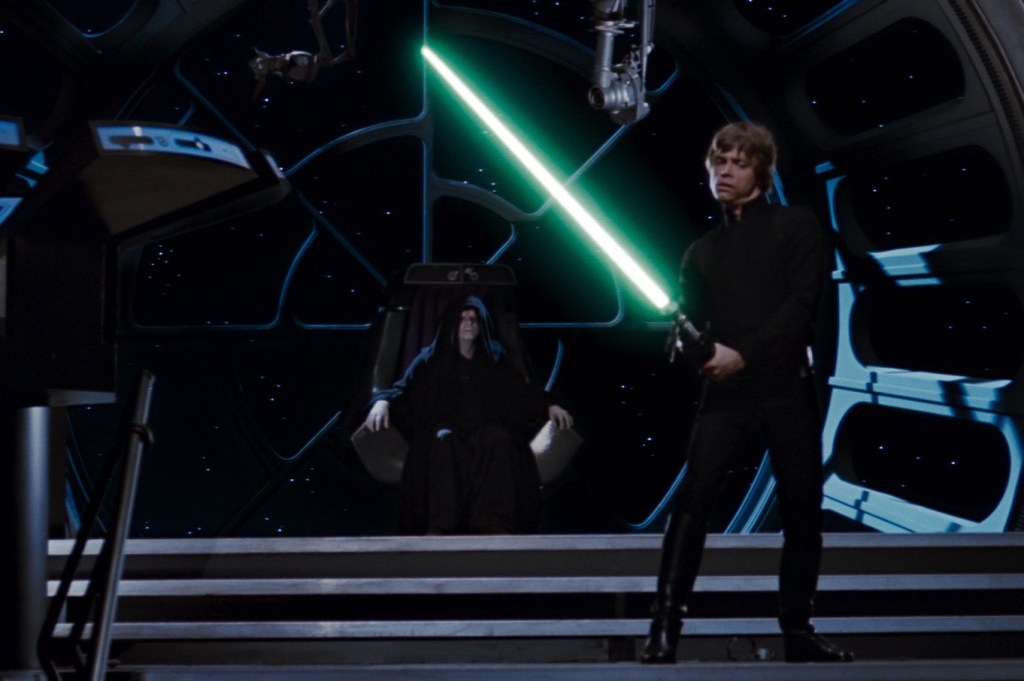
The reckless youth who once craved adventure and excitement is gone in Jedi.
From the moment Luke steps out of the misty shadows beneath Jabba’s Palace, we see he has evolved into a sage warrior who has abandoned all illusions of youth to attain a higher level of maturity and understanding.
For a start, he’s dressed in black. The evolution of his costume across the trilogy, from his Tatooine whites and Bespin greys to dark robes in Jedi symbolise Luke’s growing acceptance of his shadow side and Vader as his father.
Looking more like a Sith, Jedi presents us with a darker and more mysterious Luke. The once idealistic farm boy has an edge, hammered home by his Force choking of the Gamorrean Guards who dare to block his path.
His ambivalent introduction sets up internal and external conflicts as he takes his final steps to becoming a Jedi Knight. Luke personifies good but now has the potential for evil within him.
Conversely, Vader embodies evil but possesses the potential for redemption.
The Final Duel
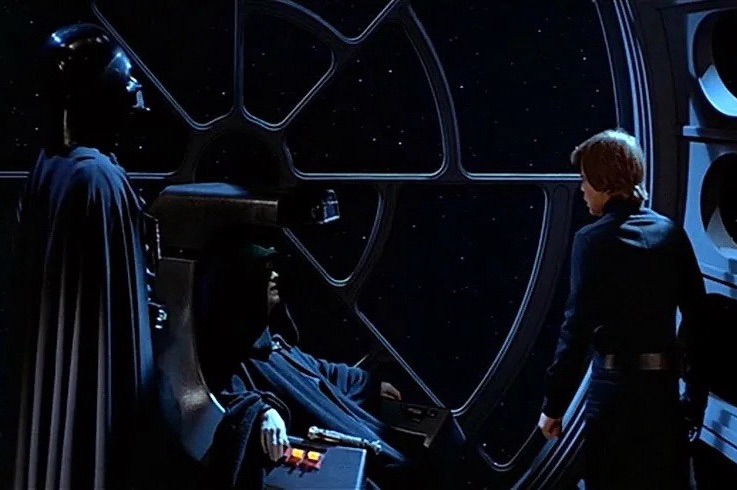
After surrendering to Vader on Endor, Luke is brought before Darth Sidious, who, as Emperor Palpatine, represents the monster that is the Galactic Empire.
High up in the Throne Room above the Death Star’s surface, Luke, Vader, and the Dark Lord of the Sith are god-like figures as they direct the galaxy’s fate. From this place (up in the heavens), the narrative, thematic and emotional messages of Star Wars beautifully dovetail to deliver the ending the trilogy deserved.
Planning to turn Luke to the dark side, the cackling Emperor teases and goads Luke. With nowhere left to turn and his friends walking/flying into a trap, the young Jedi strikes out against the Emperor and, in turn, confronts his father and the darkness of his soul.
More Machine Than Man
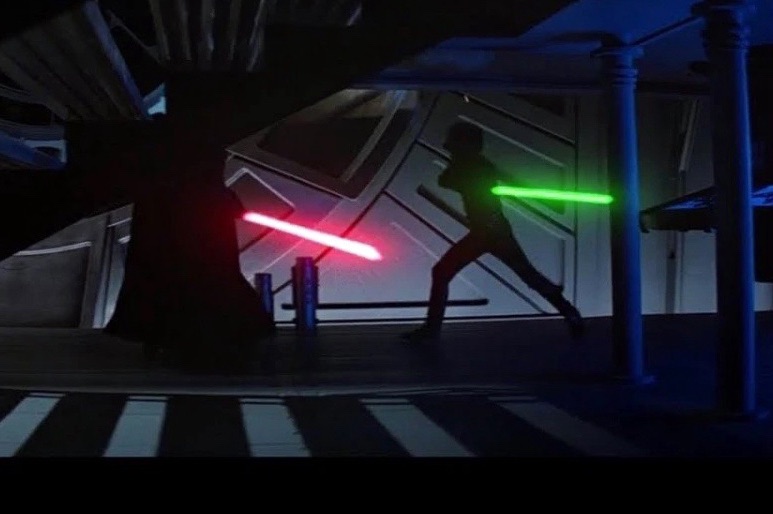
The duel takes Luke and Vader to a dark chamber below the Throne Room. Stalking his son as he hides in the shadows, Vader’s pitch-black form emits no light, signifying his lack of humanity and devotion to the dark side.
Hiding away and hoping to find another way to resolve the battle, Luke is torn between his anger and desire to remain good. Watch as his conflict is brilliantly represented by the dark and bright lighting dividing his face.
Sensing that Luke has a twin sister and threatening to turn her to the dark side, Luke strikes out in a fury against Vader to protect the ones he loves.
Unleashing a torrent of pent-up rage, Luke forces Vader to retreat under a slashing barrage of hacks and blows.
The music beautifully denotes the sense of destiny as it surges from ominous brooding to a soaring swell of strings and operatic voices as Luke overpowers his father. The sound of the clashing lightsabres intensifies the jeopardy as they punctuate the soundtrack.
I Am a Jedi
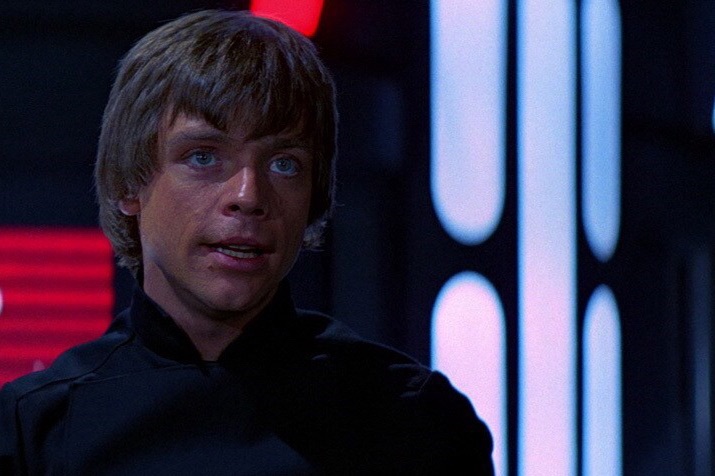
Using his anger and aggression to defeat Vader, Luke cuts off his right hand, just as Vader did to him in Empire.
Looking down at his father’s severed hand, he realises his rage is making him more machine than man. Luke is perilously close to losing his humanity at this critical juncture – he is walking the same dark road his father once took.
In the end, Luke does not go to the Dark Side. Realising he is becoming like his dark father, he casts his weapon aside in what is his defining act of the saga.
During the confrontation, Luke discovers the power to overcome his fears and rage has always been within him. Now calm and at peace, Luke taps into his innate goodness to spare Vader’s life.
Refusing Palpatine’s offer to take Vader’s place, Luke bravely speaks his famous words: “Never. I’ll never turn to the Dark Side. You’ve failed, your highness. I am a Jedi, like my father before me.”
Decades after the massacre of the order by the Sith, the Jedi had returned, symbolised by Luke Skywalker.
Tragic Hero
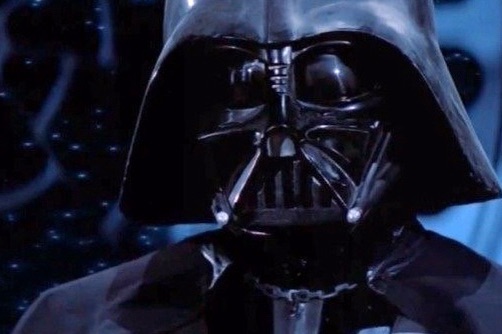
Just as the young Jedi Knight taps into his deep well of goodness, Vader also rediscovers his humanity.
In Christianity, evil is the result of a fall from grace. Like Lucifer in the Bible – who was banished from heaven for leading a revolt of angels against God – Anakin Skywalker also belonged to a powerful spiritual elite until he rebelled against it and fell from grace.
During the movie’s last moments, it falls to Luke to save his father from eternal damnation for the sins he committed as an agent of evil. Remember, Luke didn’t defeat Vader with violence and hatred (although he nearly did) – he saved him through love and compassion.
This act is a revelation to Vader and reminds him of what he once was.
After all, aren’t Jedi encouraged to love?
From the brief shots of Vader’s physical form under his mask in Empire, we know he is a scarred and tortured person. His flesh is as corrupted as his soul. Yet something from his past stirs within him as he watches the Emperor destroy his son.
What happens next brings the stories of Anakin and Luke Skywalker full circle.
Refusing to let the Emperor murder his son, the brave and virtuous man who was once Anakin Skywalker finally completes his journey back from the dark side.
Witnessing Anakin’s silent conflict as he watches Palpatine torture Luke is one of the highlights of the trilogy. As the camera focuses on his mask, Vader’s face is illuminated by the Force lightning to show us he is returning to the light side.
And with Luke now close to death, Anakin does what any father would do for their child; he sacrifices his life to save theirs.
Spurred on by the love of his son, he then destroys the Emperor by throwing him down the Death Star’s reactor shaft.
At this point, Anakin has rejected the dark side to fulfil his destiny as the ‘chosen one’ and bring balance to the Force.
Throughout the saga, fans are reminded of Anakin’s greatness. In Jedi, we accept he is a tragic hero who once possessed the powers to do good until he perverted them for corrupt ends.
Although Luke’s love and compassion for his father help bring him back from the depths of despair and darkness, by the end of the trilogy, Anakin, too, is the hero.
A Human Face
With the Emperor dead (for now!) and Vader mortally injured, Luke tries to save his father from the exploding Death Star.
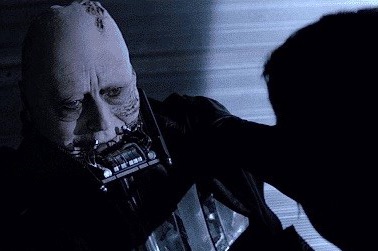
Dragging Anakin’s shattered body through the exploding wreckage, they finally collapse on the floor. It’s here, at the end, and knowing it will mean his death, that Anakin insists Luke removes his helmet.
This poignant moment reveals a very human face under the mask. Although hideously scarred, Anakin looks sad – a far cry from the monster portrayed throughout the story.
At this point, we know he has returned to the light as he recognises the errors of his ways. It also teaches us that it’s never too late to reject evil.
Looking (properly) into each other’s eyes for the first time, the two connect, acknowledging their love for one another – as father and son.
Having attained grace through Luke, Anakin’s redemption is complete as he passes away…
A Hero’s Send-off
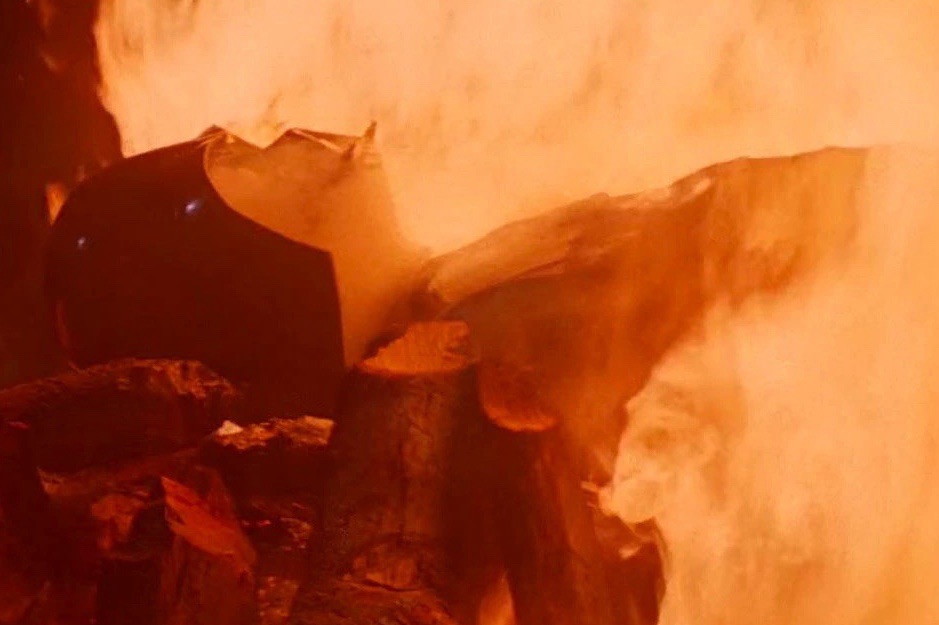
With striking imagery, Luke gives his father a hero’s send-off by placing his armour on a funeral pyre.
The cremation is symbolic as Luke burns Vader’s mechanical body, leaving behind the redeemed spirit of Anakin Skywalker as his soul rises with the smoke to the heavens.
Finally, as Luke re-joins Leia and friends at the Ewok village along with the spirits of Anakin, Obi-Wan and Yoda, I’m reminded of his name… Skywalker.
It reveals his destiny – that he is fated to travel across the heavens as one of the greatest characters to grace the silver screen.
From his beginnings as a callow farm boy on Tatooine, to the end of Return of the Jedi, Luke has achieved a fairy-tale triumph – that of an (outwardly) ordinary boy who grew to master his extraordinary gifts.
Even deeper, Luke (despite his bloodline) shows us that anyone can achieve heroism and attain wisdom. This, coupled with a story of redemption and the victory of good over evil, is the ultimate beauty of Star Wars.
What’s not to love in that?

 Rebel Briefing
Leave a comment