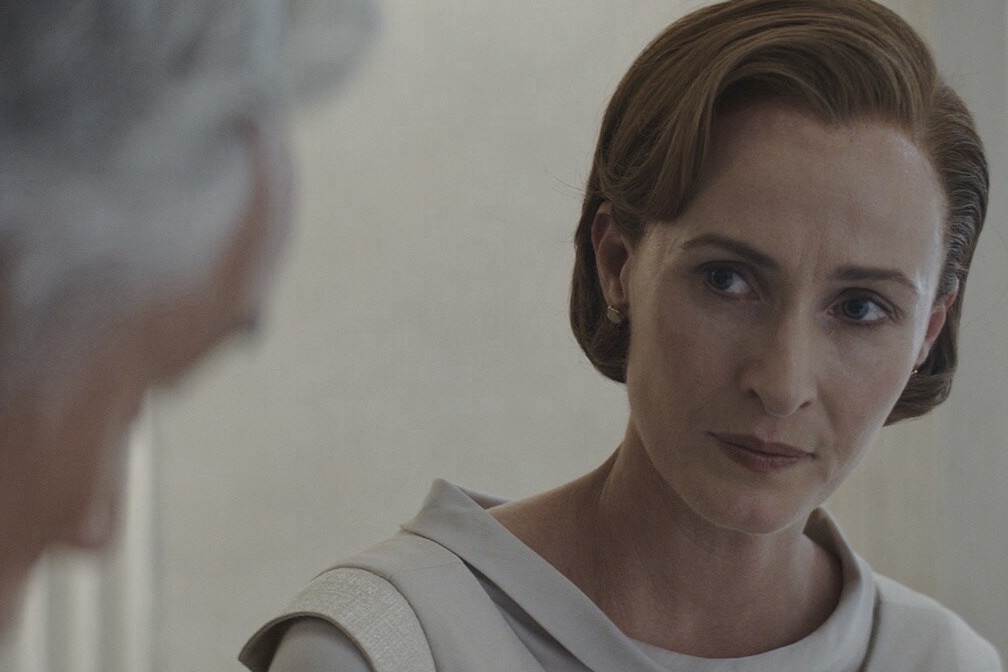
In part 2 of Rebel Briefing’s study of Andor’s monologues, Luthen Rael and Mon Mothma reveal the dark, calculated side of rebellion, where deception and sacrifice define the fight for freedom.
Last week, we explored the powerful monologues of Maarva Andor and Kino Loy in Andor, each a defining moment that captures the essence of rebellion and sacrifice. This week, we turn our attention to the chilling confession of Luthen Rael and the tense duologue between Mon Mothma and Tay Kolma. These moments showcase the darker, more complex aspects of the rebellion, where moral ambiguity and strategic deception take centre stage.
Luthen Rael: The Cold Calculus of Sacrifice
Stellan Skarsgård’s portrayal of Luthen Rael brings a different kind of intensity to Andor’s lineup of monologues. Luthen, a shadowy rebel leader, operates in the murky grey areas of morality, making choices that are as cold as they are calculated. His monologue, delivered in a tense exchange with his informant Lonni, is a chilling reflection on the sacrifices that rebellion demands.
Skarsgård’s performance is marked by its understated delivery. Luthen’s speech is devoid of the overt emotion seen in Maarva and Kino’s monologues; instead, it’s delivered with a calm detachment that is deeply unsettling. When Luthen admits, “I burn my life to make a sunrise that I know I’ll never see,” Skarsgård’s voice carries a quiet bitterness, a resignation to the fact that his role in the rebellion has stripped him of everything that once made him human.
Luthen’s monologue forces the audience to confront the uncomfortable truth that rebellion is often a dirty, thankless job. It’s not just about the heroic acts of resistance we’re used to seeing in Star Wars; it’s about the sacrifices made in the shadows, the lives ruined in the pursuit of a greater good. Skarsgård’s performance is a masterclass in subtlety, revealing the depth of Luthen’s character through the smallest shifts in tone and expression. His portrayal of a man who has sacrificed his soul for the cause adds a layer of complexity to Andor, making Luthen’s monologue one of the most thought-provoking moments in the series.
Mon Mothma and Tay Kolma: A Dance of Words
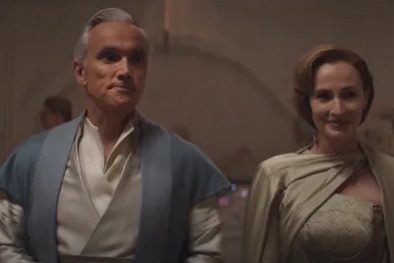
When it comes to standout dialogue in Andor, few scenes match the brilliance of the duologue between Mon Mothma and Tay Kolma. This exchange isn’t just a conversation; it’s a masterclass in subtle tension and political manoeuvring. On the surface, it seems like a casual reunion between old friends, but beneath the pleasantries, there’s a current of unease as Mon carefully navigates the treacherous waters of rebellion and trust.
Much of the brilliance lies in the nuanced performance of Genevieve O’Reilly as Mon Mothma. O’Reilly brings a remarkable depth to the character, effortlessly conveying the duality of Mon Mothma’s existence. On one hand, she presents the poised, controlled senator, while on the other, she subtly reveals the strain of living a double life under constant surveillance by the Empire.
O’Reilly’s delivery of the line, “I show you the stone in my hand, you miss the knife at your throat,” is a masterclass in understated tension. With just a slight shift in tone and expression, she communicates the gravity of Mon Mothma’s predicament, revealing the immense pressure she’s under to maintain her façade while steering the rebellion from the shadows. Her voice carries the weight of years spent in this delicate balancing act, making the line not just a statement of strategy, but a window into Mon Mothma’s inner turmoil.
“I show you the stone in my hand, you miss the knife at your throat.”
Mon Mothma
What truly elevates O’Reilly’s performance is her ability to convey complex emotions with subtlety. In her interactions with Tay Kolma, she layers her character’s outward calm with a palpable undercurrent of anxiety and caution. Even her brief instruction to “Smile” is delivered with such precise control that it encapsulates the constant need for vigilance in a world where every gesture can be misinterpreted or weaponised.
Tay, responding with an easy smile, mirrors this tension. There’s an unspoken understanding that both are walking a razor’s edge, where trust is a dangerous gamble. This delicate balance is underscored when Mon, with a smile, reminds Tay to maintain the façade. Their duologue is more than a conversation; it’s a razor-sharp dance of deception, where the stakes couldn’t be higher.
The Soul of Andor in Four Speeches
The monologues in Andor are more than just powerful speeches; they are the beating heart of the series, peeling back the layers of its characters and exploring the themes of rebellion and sacrifice in a galaxy far, far away. Maarva’s call to arms, Kino’s desperate rally, and Luthen’s cold calculation each offer a unique perspective on the cost of resistance, brought to life by the exceptional performances of Fiona Shaw, Andy Serkis, Stellan Skarsgård, and Genevieve O’Reilly.
Through these monologues, Andor transcends the traditional Star Wars narrative, delving deep into the emotional and philosophical struggles that define the fight against tyranny. In a universe known for its epic battles and grand adventures, The series reminds us that the most powerful weapons in the fight for freedom are words, conviction, and the quiet, unyielding resolve of those who refuse to be silenced. And in the end, it’s these moments of raw humanity that will resonate the longest, echoing through the stars long after the final credits roll.
 Rebel Briefing
Leave a comment