
Rebel Briefing marks the 20th anniversary of Revenge of the Sith, examining Palpatine’s rise as a chilling blueprint for authoritarianism.
As we celebrate the 20th anniversary of Revenge of the Sith, one of Star Wars’ most iconic and chilling characters continues to haunt us: Chancellor Palpatine. While his rise to power in a galaxy far, far away may have seemed like a fantastical villainous plot when the film first released, it has since become a disturbingly familiar story. Palpatine’s transformation from a respected senator to the Emperor is a cautionary tale that echoes with unnerving relevance today.
Revenge of the Sith wasn’t just about lightsabers and epic battles—it was a sharp political commentary. The story of Palpatine’s rise is a reminder that democracy isn’t invulnerable. It’s fragile. His path to power wasn’t one of violence or a military coup, but a slow, calculated manipulation of the system. By preying on fear, using crisis as a tool, and taking advantage of legal loopholes, Palpatine transformed a Republic into an Empire, all with the consent of those who should have known better.
The Subtle Path to Power
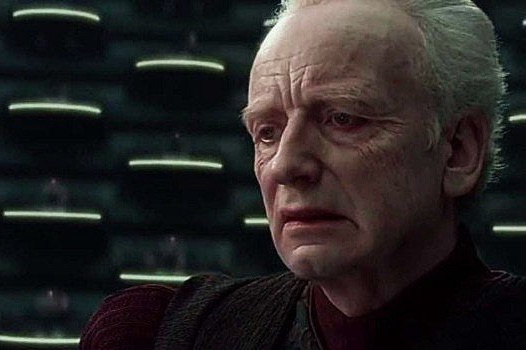
Unlike many cinematic villains who simply seize power with brute force, Palpatine’s method is far more subtle—and more terrifying. In The Phantom Menace, he’s just a quiet senator from Naboo. By Attack of the Clones, he’s granted emergency powers to manage a galactic crisis. But by the time of Revenge of the Sith, he has manipulated his way into total control, so much so that his transformation into Emperor feels like a natural next step, rather than a dramatic coup.
His rise is a perfect reflection of something we see throughout history: democracies don’t always fall in a blaze of violence. More often, they crumble under the weight of fear, media manipulation, and the erosion of political norms. Palpatine manufactured a war, positioned himself as the only one who could end it, and then used that crisis to seize more power, all while maintaining the façade of democracy. His success isn’t about taking power by force—it’s about being granted power, bit by bit, by those who are too afraid to resist.
Fear as a Tool of Control

What makes Palpatine so dangerous isn’t just his ability to wield power—it’s how he uses fear as his weapon. He doesn’t storm the Senate with an army of clones; he uses the very institutions of the Republic to consolidate his control. The fear of the Separatists, the chaos of the Clone Wars—these are the tools he uses to make himself seem indispensable. The more the galaxy suffers, the more Palpatine presents himself as the only solution. It’s not military might that wins him power—it’s the fear of what will happen without him.
The genius of Palpatine’s manipulation is in its quiet, gradual nature. He never forces anyone’s hand; he simply makes them think that they have no other choice. He chips away at the Republic’s democratic foundations, using legal channels and public sentiment to justify each step he takes. The ultimate irony is that Palpatine’s success depends on the very system that was supposed to prevent such a rise in the first place.
Turning the Jedi Against Themselves
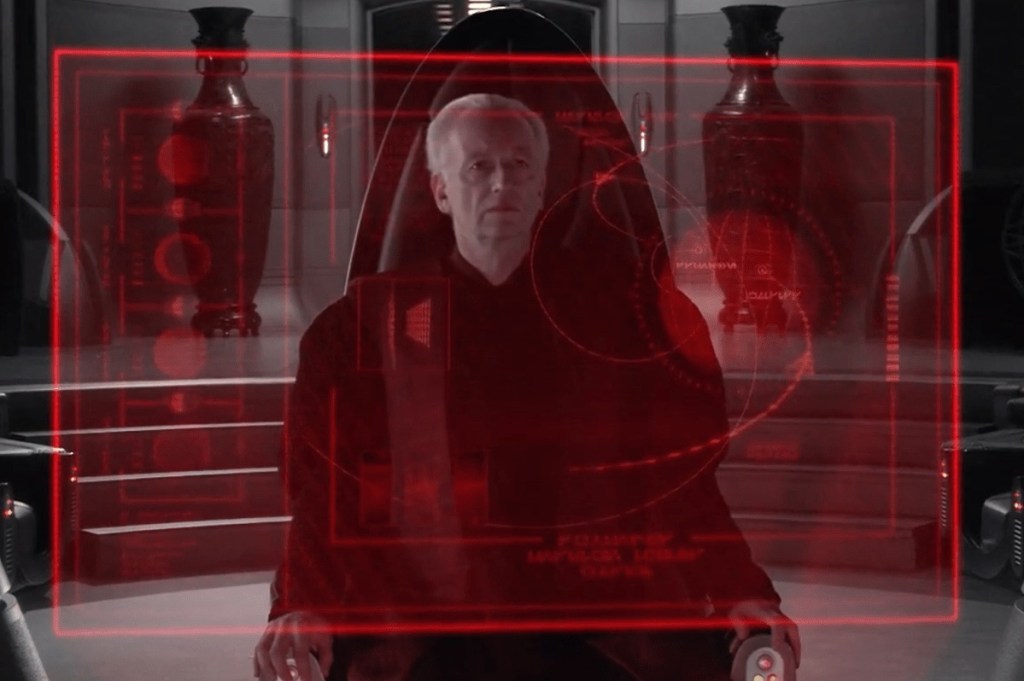
While Palpatine’s manipulation of the Senate is chilling, his true brilliance lies in his ability to turn the Jedi against themselves. The Jedi, the very guardians of peace in the Republic, are gradually painted as traitors, enemies of the state, part of a “Sith conspiracy” carefully crafted by Palpatine himself. The Jedi don’t see it coming. They’re too busy trying to maintain order in a galaxy at war, and in doing so, they fail to notice the subtle erosion of their power.
It’s a pattern we’ve seen in real-world politics too: leaders who weaken institutions by turning them against their own values, slowly poisoning them from within. Palpatine doesn’t just take power by force; he manipulates institutions that were meant to stand in his way. And in the end, it’s the complacency of those institutions—like the Jedi—that paves the way for the fall of the Republic.
Anakin Skywalker: The Personal Cost of Power
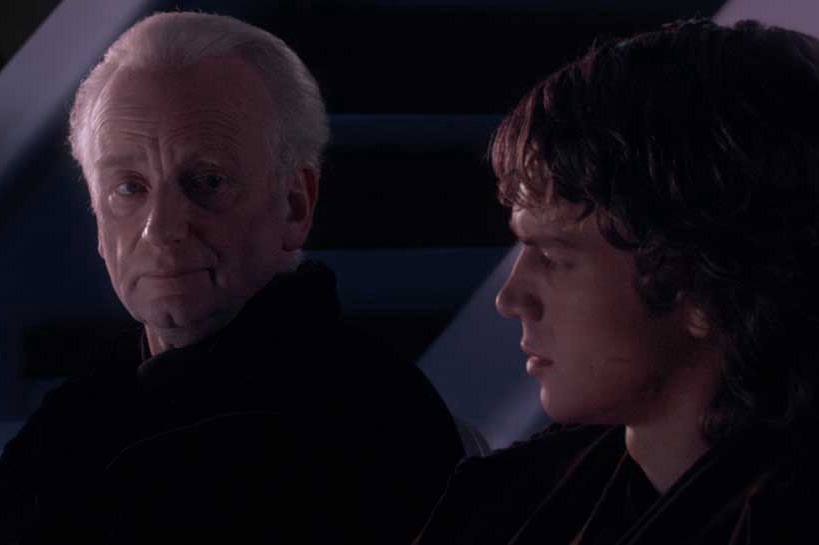
The tragedy of Palpatine’s rise isn’t just political—it’s deeply personal. One of the most heartbreaking aspects of Revenge of the Sith is how Palpatine manipulates Anakin Skywalker. Anakin’s fears—his fear of losing Padmé, his fear of death—are the perfect vulnerabilities for Palpatine to exploit. Palpatine doesn’t just promise power—he promises the one thing Anakin craves most: the ability to control fate itself.
This is where the true danger of authoritarianism lies: not in the rise of a leader, but in the way that leader manipulates the emotions of those around them. Anakin’s fall isn’t just the destruction of a hero; it’s a tragic reflection of how fear, greed, and love can be twisted by those in power. Palpatine doesn’t just destroy the Republic—he destroys a man, turning him into something monstrous in the process.
The Fall of Democracy

In the end, Revenge of the Sith is a story about how democracy falls—not through a violent invasion, but through complacency and manipulation. The Republic doesn’t collapse because of a foreign enemy; it collapses because its leaders, in the face of crisis, slowly allow power to shift into the hands of one man. The institutions that should have protected the people—like the Senate and the Jedi—are co-opted and manipulated by Palpatine, allowing him to consolidate control.
It’s a painful reminder that democracies are fragile. They don’t just fall overnight. They erode over time, as fear and manipulation chip away at their foundations. Palpatine’s rise is an example of how power doesn’t have to be seized with violence—it can be granted, little by little, until it’s too late to stop.
A Timeless Warning

Twenty years after Revenge of the Sith, the lessons of Palpatine’s rise remain shockingly relevant. We live in a time where fear is often manipulated for political gain, and where the very systems that are meant to protect freedom can be bent to justify the consolidation of power. Palpatine’s story is more than just the rise of a Sith Lord; it’s a cautionary tale about the fragility of democracy and the dangers of complacency.
The Emperor’s rise may be set in a galaxy far, far away, but the warning it carries is something we should never forget. Palpatine’s success wasn’t about seizing power by force—it was about slowly eroding the very systems that made the Republic strong in the first place. In our own world, we must remain vigilant, aware of the dangers that come when fear and manipulation are allowed to flourish. Because, as Revenge of the Sith reminds us, democracy doesn’t always die with a bang. Sometimes, it dies with thunderous applause.
 Rebel Briefing
Leave a comment