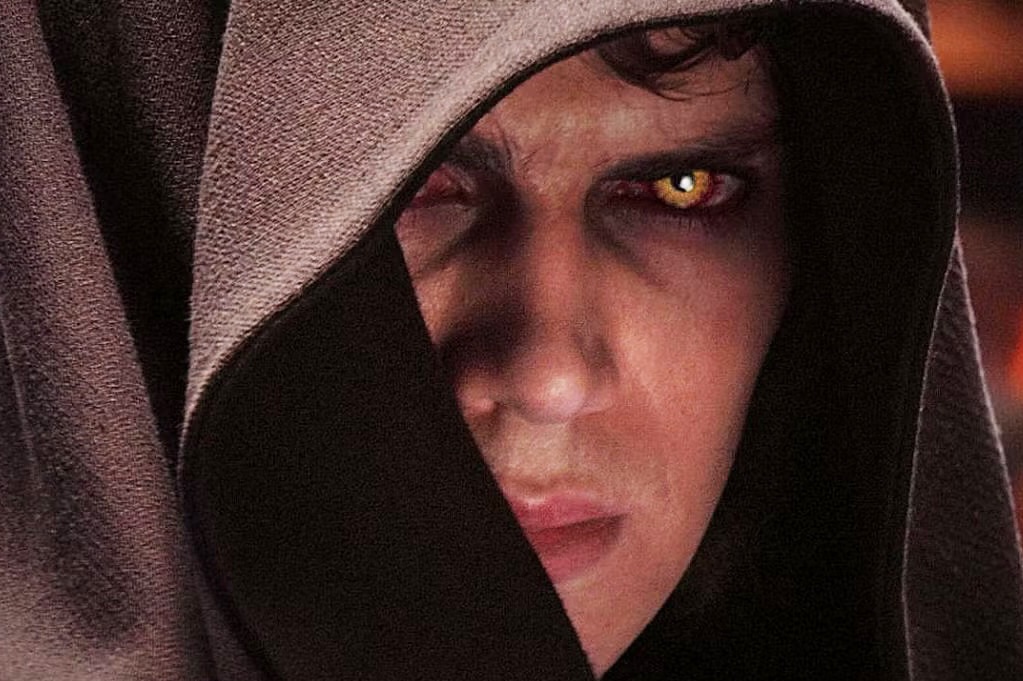
This week, Rebel Briefing plunges into the myth, menace, and melancholy of Revenge of the Sith – a searing saga of prophecy, and a hero’s harrowing fall.
In the long shadow of the Clone Wars, the Jedi Order crumbles. A hero falls. A republic dies. And from the ashes, Darth Vader rises.
Released twenty years ago, Star Wars: Revenge of the Sith is more than a prequel, it is a mythic tragedy cloaked in the robes of science fiction. Anakin Skywalker’s descent draws from the timeless arcs of Macbeth (the ambitious nobleman undone by prophecy in Shakespeare’s play), Lucifer (the fallen angel cast from Heaven in Christian theology), and Lancelot (King Arthur’s champion, undone by love and betrayal). Through this modern epic, George Lucas taps into storytelling traditions as old as myth itself, asking questions about power, loss, destiny—and whether the Chosen One can escape the chains of fate.
The Anatomy of a Tragic Hero

Anakin Skywalker is not merely a protagonist—he is a classical tragic hero. Like Macbeth or Lucifer, his greatest virtues are bound to his fatal flaw. He loves fiercely, fights valiantly, and fears deeply. His refusal to accept loss becomes the lever of his ruin.
The film introduces him at the height of his powers: a war hero, trusted by the Republic and beloved by Obi-Wan Kenobi. Yet beneath the accolades lies a young man pulled in three directions—by duty to the Jedi, love for Padmé, and the growing influence of Chancellor Palpatine.
Already, the storm gathers.
The Weight of Destiny
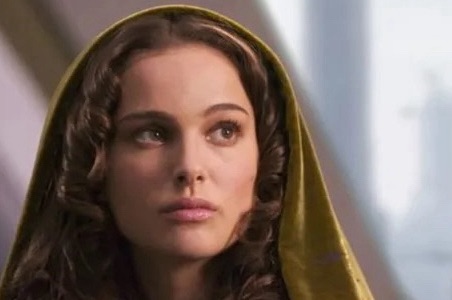
What elevates Revenge of the Sith beyond space opera is its mythic inevitability. Every choice Anakin makes draws him deeper into shadow. Like Icarus, the youth from Greek myth who flies too close to the sun, Anakin rises with hope but falls in flames—not out of arrogance alone, but desperation to prevent death.
Lucas crafts this arc with deliberate echoes of classical tragedy. Anakin resists the destiny that haunts him, only to bring it to life. He seeks to save Padmé, to rewrite fate—but in doing so, becomes the architect of his own destruction.
The Tempter in the Shadows
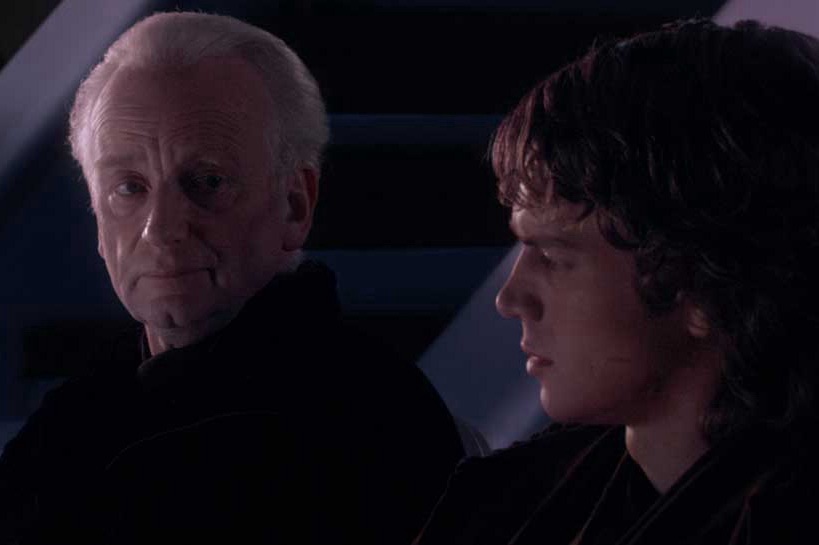
Central to Anakin’s unraveling is Palpatine, who acts less like a sci-fi villain and more like a mythic trickster or demonic figure—akin to Mephistopheles, the tempter in the Faust legend who offers forbidden power at a spiritual cost.
Palpatine’s seduction is intimate, almost tender. He doesn’t lure Anakin with hatred—he exploits his love. He preys on his fear of loss, his longing for control, his belief that strength can stop death.
In myth, damnation often masquerades as salvation. Palpatine is the devil in a cloak of concern.
The Jedi and the Failing Order
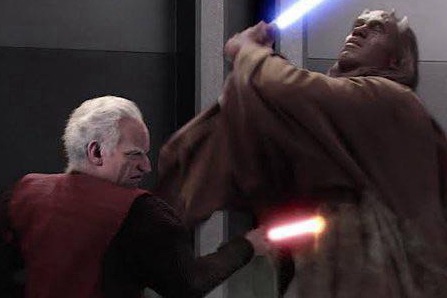
In myth, institutions often collapse not from outside threat but inner rigidity. The Jedi are no exception. Bound by doctrine and entangled in war, they fail to offer Anakin what he needs most: compassion, not control.
Their downfall echoes the fall of Camelot (the utopian kingdom undone by pride and betrayal), the complacency of Mount Olympus, and the tragic blindness of Troy—all brought low by hubris and an inability to evolve.
Anakin’s betrayal is personal, but it is also systemic. The Jedi did not fall because of Anakin—they fell with him.
Fire and Ruin: The Mustafar Duel
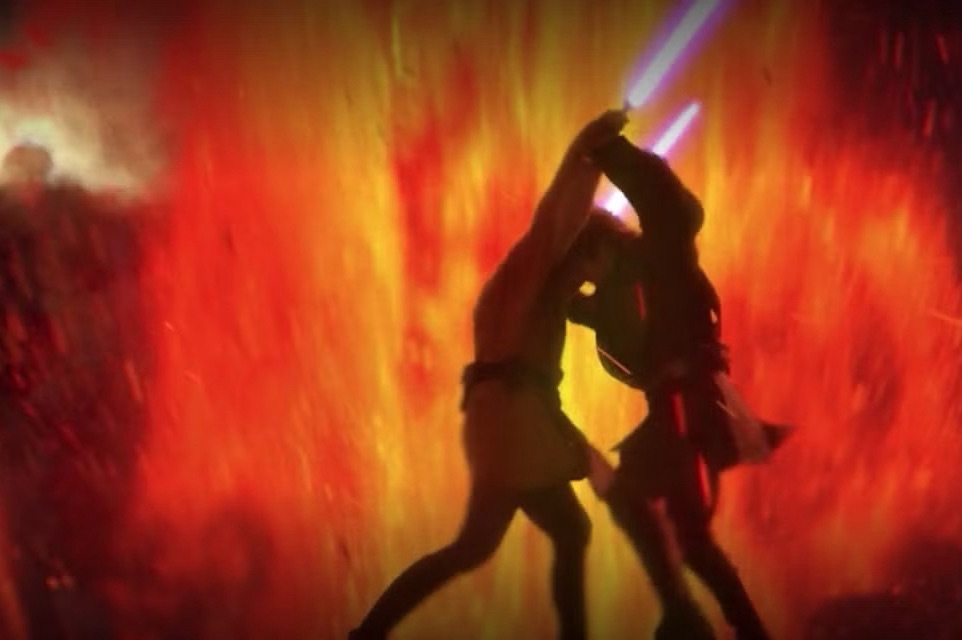
As the Jedi fall and Palpatine’s plan nears completion, the saga reaches its operatic peak. The duel on Mustafar isn’t just a fight—it’s a reckoning.
Anakin and Obi-Wan, once brothers, now clash like forces of myth. The lava-swept landscape is no mere backdrop—it is the fiery heart of Anakin’s soul made flesh, a burning crucible of rage and ruin. Mustafar is hell itself: a molten abyss where hope is consumed by flame, where every step scorches the past and forges a new, darker destiny.
Here, amid rivers of fire and skies veiled in smoke, the boy who dreamed of saving lives is destroyed—and the monster called Darth Vader is born. This is the inferno where light dies, and shadow is forged in agony.
‘You were the Chosen One!’ is not just heartbreak—it is prophecy burning in real time.
This is Lucifer’s fall from Heaven. It is Mordred’s betrayal at Camlann, the final collapse of the Arthurian dream.
Two heroes enter. One monster emerges.
The End… and the Beginning
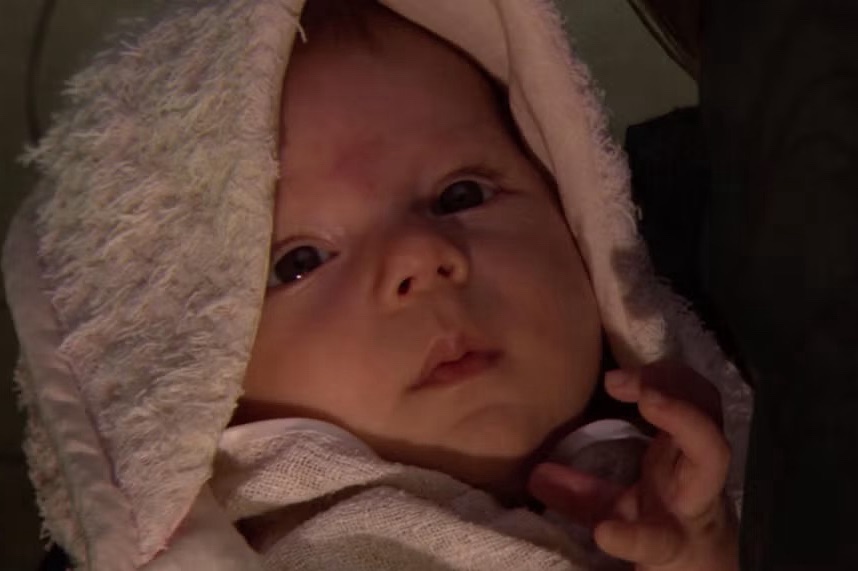
Then comes silence.
Anakin burns. Padmé dies. The twins are hidden. The Jedi are broken. The Republic is gone.
But the myth survives.
Revenge of the Sith is not simply a prelude to the Original Trilogy—it is the emotional keystone of the Skywalker saga.
It’s the reason Luke’s journey matters.
He doesn’t just battle tyranny—he battles trauma, prophecy, and the ghost of a fallen father.
He doesn’t just fight a tyrant—he faces the ghost of a fallen father and the legacy of a broken prophecy.
In a pop culture landscape obsessed with redemption, Revenge of the Sith dares to ask harder questions:
What if the hero loses?
What if love curdles into fear, and fear into tyranny?
And most mythically of all—can anything rise from those ashes?
The Tragedy That Still Burns
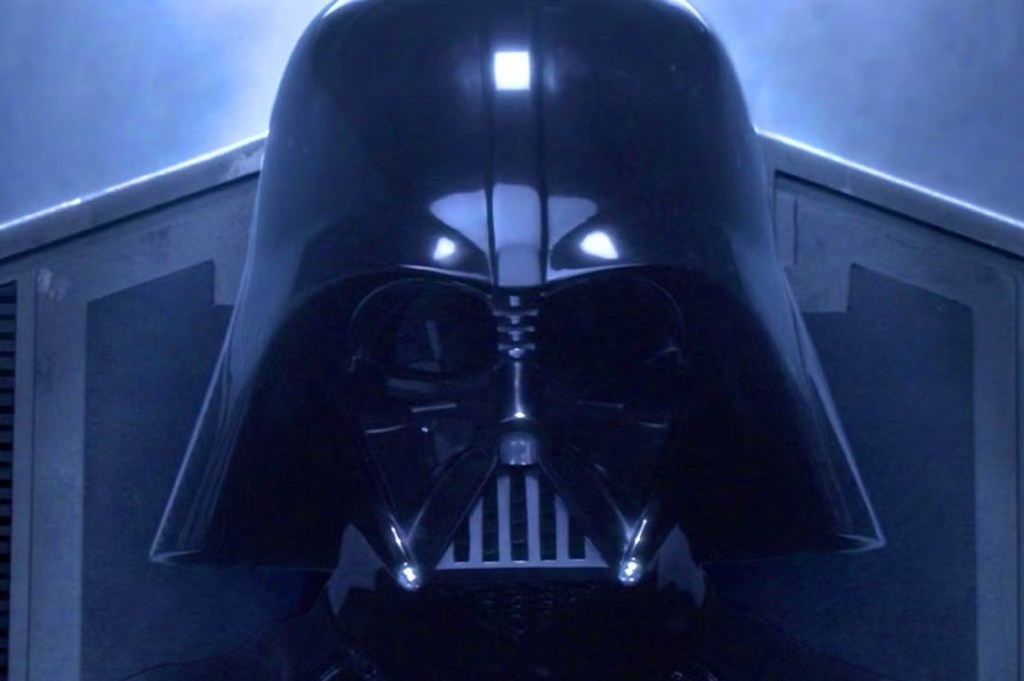
Twenty years later, Revenge of the Sith remains a singular achievement. It is operatic, intimate, and mythic in scope—a cautionary tale that resonates because it touches something eternal.
In a culture obsessed with redemption, Revenge of the Sith dares to ask: What if the hero doesn’t win?
Even now, it burns with questions we are still asking.
And yet—through fire, through failure—hope endures.
That, too, is the myth at the heart of Star Wars.
 Rebel Briefing
Leave a comment